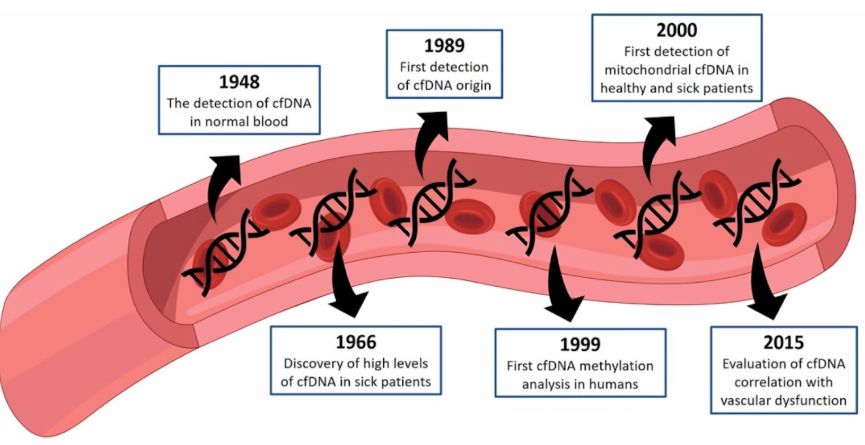
Cell-free DNA (cfDNA) has revolutionized cancer diagnostics and monitoring. These small fragments of DNA, shed by tumors into the bloodstream, provide a non-invasive "liquid biopsy" alternative to traditional tissue biopsies. In this comprehensive guide, we'll explore why cfDNA is transforming cancer care and how it's being applied in clinical practice.
Why is cfDNA Important in Cancer?
1. Non-Invasive Detection
- Avoids risky surgical biopsies
- Enables early cancer detection even before imaging can reveal tumors
- Useful for monitoring treatment response in real-time
2. Capturing Tumor Heterogeneity
Tumors evolve and spread throughout the body. Unlike single-site biopsies that only capture a snapshot of one tumor location, cfDNA reflects all metastatic sites, providing a comprehensive view of the cancer's genetic landscape.
3. Minimal Residual Disease (MRD) Detection
One of the most promising applications of cfDNA is detecting cancer recurrence earlier than traditional methods. It can identify minimal residual disease before it shows up on imaging or through biomarkers like CA-125 or PSA.
4. Personalized Therapy
By identifying actionable mutations such as EGFR or BRCA, cfDNA testing enables oncologists to prescribe targeted therapies tailored to each patient's unique cancer profile.
Standard cfDNA Analysis Pipeline
A typical cfDNA analysis workflow involves multiple steps, each critical for obtaining accurate results:
| Step | Tools/Methods | Purpose |
|---|---|---|
| 1. Blood Collection | Streck tubes / EDTA tubes | Prevent DNA degradation |
| 2. Plasma Isolation | Centrifugation (2,000g → 16,000g) | Separate cfDNA from cells |
| 3. DNA Extraction | QIAamp Circulating Nucleic Acid Kit | High-purity cfDNA isolation |
| 4. Library Prep | KAPA HyperPrep / ThruPLEX® | Adaptor ligation, PCR amplification |
| 5. Sequencing | Illumina (WGS/WES/panels) | Detect genetic mutations |
| 6. Bioinformatics | SNPs: GATK Mutect2, LoFreq CNVs: ichorCNA, CNVkit SVs: Manta, Delly |
Variant calling and analysis |
| 7. Clinical Reporting | COSMIC, CIViC, OncoKB | Actionable insights for treatment |
Comparing Two Breakthrough Studies on cfDNA
Study 1: Ultra-Sensitive ctDNA Detection for Early-Stage Cancer (Nature, 2023)
Key Finding: A new error-suppressed sequencing method detected ctDNA at 0.01% variant allele frequency (VAF), compared to 0.1% in standard methods.
Pipeline Highlights:
- UMI-based consensus sequencing (fgbio + GATK)
- Machine learning classifier to distinguish tumor from normal DNA
Clinical Implications:
- Could enable early-stage cancer screening for difficult-to-detect cancers like pancreatic and ovarian cancer
- Detected minimal residual disease in 85% of cases before clinical relapse
Study 2: Longitudinal cfDNA Analysis Predicts Immunotherapy Response (Cell, 2024)
Key Finding: Dynamic changes in cfDNA mutation load predicted immunotherapy success in melanoma patients.
Pipeline Highlights:
- Shallow whole-genome sequencing (0.5x coverage) + CNVkit for tumor fraction estimation
- SNV tracking with VarScan 2
Clinical Implications:
- Early identification of non-responders, allowing clinicians to switch treatments sooner
- Tumor mutational burden (TMB) from cfDNA correlated with progression-free survival
💡 Key Takeaways
✔ Use error-corrected NGS for ultra-low VAF detection
✔ Combine CNV + SNP + SV analysis for comprehensive profiling
✔ Liquid biopsies will soon be standard in cancer care
Conclusion
cfDNA is transforming oncology by enabling earlier detection, real-time monitoring, and precision therapy. While challenges remain around sensitivity and cost, advances in UMI-based sequencing and AI-driven analysis are pushing the boundaries of what's possible.
The future of cancer care is moving toward non-invasive, personalized approaches—and cfDNA is at the forefront of this revolution.
Need cfDNA Analysis Services?
Let BioCogniz handle your cfDNA sequencing and analysis with our comprehensive pipeline
Get In Touch